Feed the plants, not the soil
Get manure, litter, and soil tested in order to calculate an appropriate application rate — feeding what the crop actually needs.
Never Hungry Community Gardens partners with the Tennessee Department of Agriculture and Tennessee Waterworks to follow conservation practices that protect our soil, livestock, neighbors, and downstream waterways.
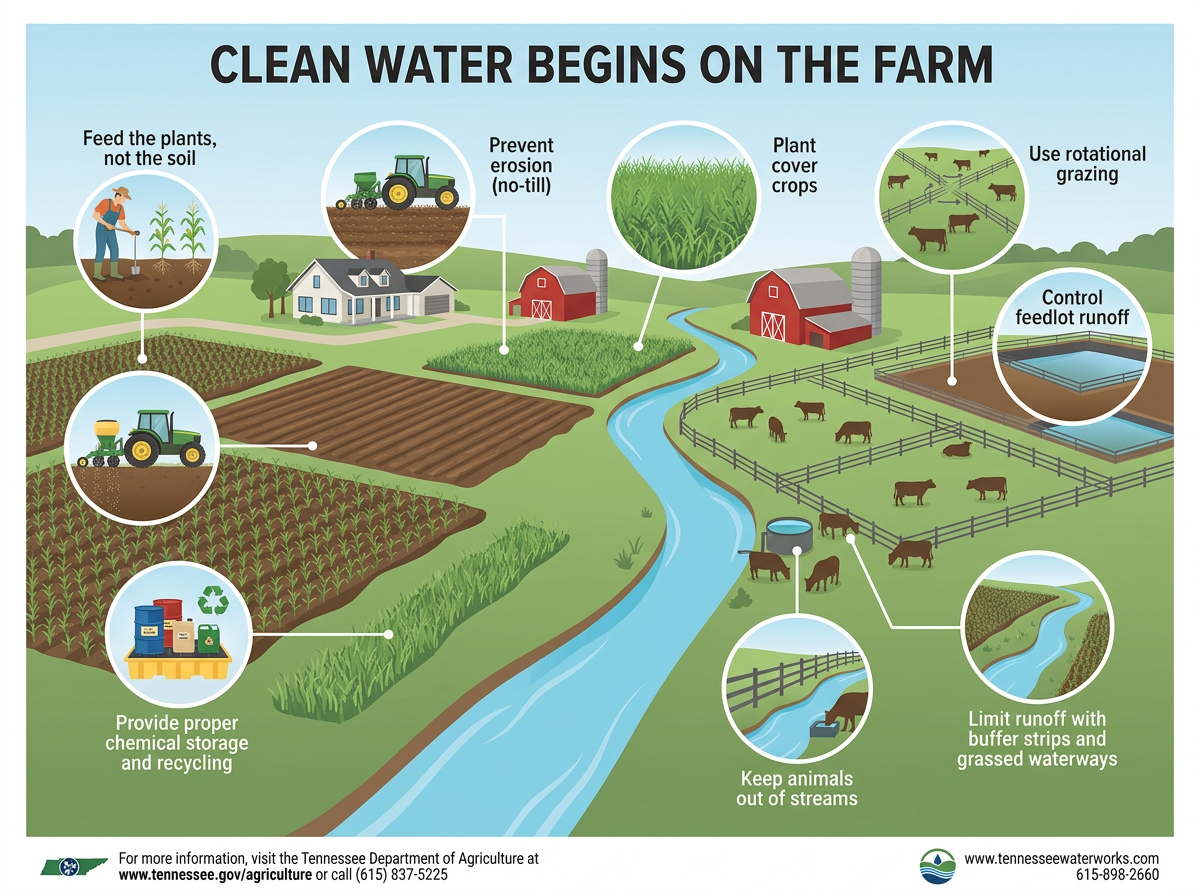
From soil testing to streambank fencing, every acre is managed to keep nutrients on the field and out of the water.
Get manure, litter, and soil tested in order to calculate an appropriate application rate — feeding what the crop actually needs.
Use no-till or minimum-tillage practices to keep topsoil in place and out of streams.
Cover crops prevent erosion, enrich soil nutrients, and protect bare ground between cash crops.
Roof, berm, and divert clean water around livestock areas so manure-laden runoff never reaches waterways.
Move animals across paddocks so pasture recovers, roots stay deep, and soil stays covered year-round.
Fence streams and springs; provide alternative water sources and stabilized stream crossings.
Limit runoff and reduce water pollution with permanent vegetative cover, buffer strips, and grassed waterways.
Provide proper storage, secondary containment, and recycling for chemicals and fluids.
Take used oil, pesticide containers, and equipment fluids to certified recycling programs.
Visit the Tennessee Department of Agriculture or call to talk with a conservation specialist about practices that fit your land.